Wall Reinforcement
Bowing basement walls don't fix themselves. We install steel beams or carbon fiber straps to stop the movement and protect your home's foundation permanently.
Is Your Wall Telling You Something?
Bowing walls are a structural problem that gets worse over time. Ohio's clay soil expands and contracts with every freeze-thaw cycle, pushing against your foundation year after year. Here's what to watch for.
Horizontal Cracks
Cracks running side to side across a block or poured wall are a sign of lateral soil pressure. Get them looked at before they progress.
Bowing or Bulging Wall
If the middle of your wall looks like it's leaning inward, it is. Even a small bow means the wall has already moved and the pressure isn't stopping.
Stair-Step Cracks
Diagonal cracks following the mortar joints in a block wall typically signal shifting and settling. Combined with bowing, this is a red flag.
Wall Gaps at Floor or Ceiling
Separation between your wall and the floor joists or slab means the wall has moved significantly. Don't wait on this one.
Doors or Windows Sticking
When foundation walls shift, door and window frames go out of square. If they're suddenly hard to open or close, your foundation may be moving.
You Can See Daylight
Gaps, cracks, or separations that let in light or air mean your wall's integrity is seriously compromised. Call us today.
The Steel Beam Process
We don't guess. We assess the wall, build the fix around what we find, and back it for life.
Free Inspection
Brandon comes out, evaluates the wall in person, and gives you a straight answer on what's happening and what it takes to fix it.
Beam Placement
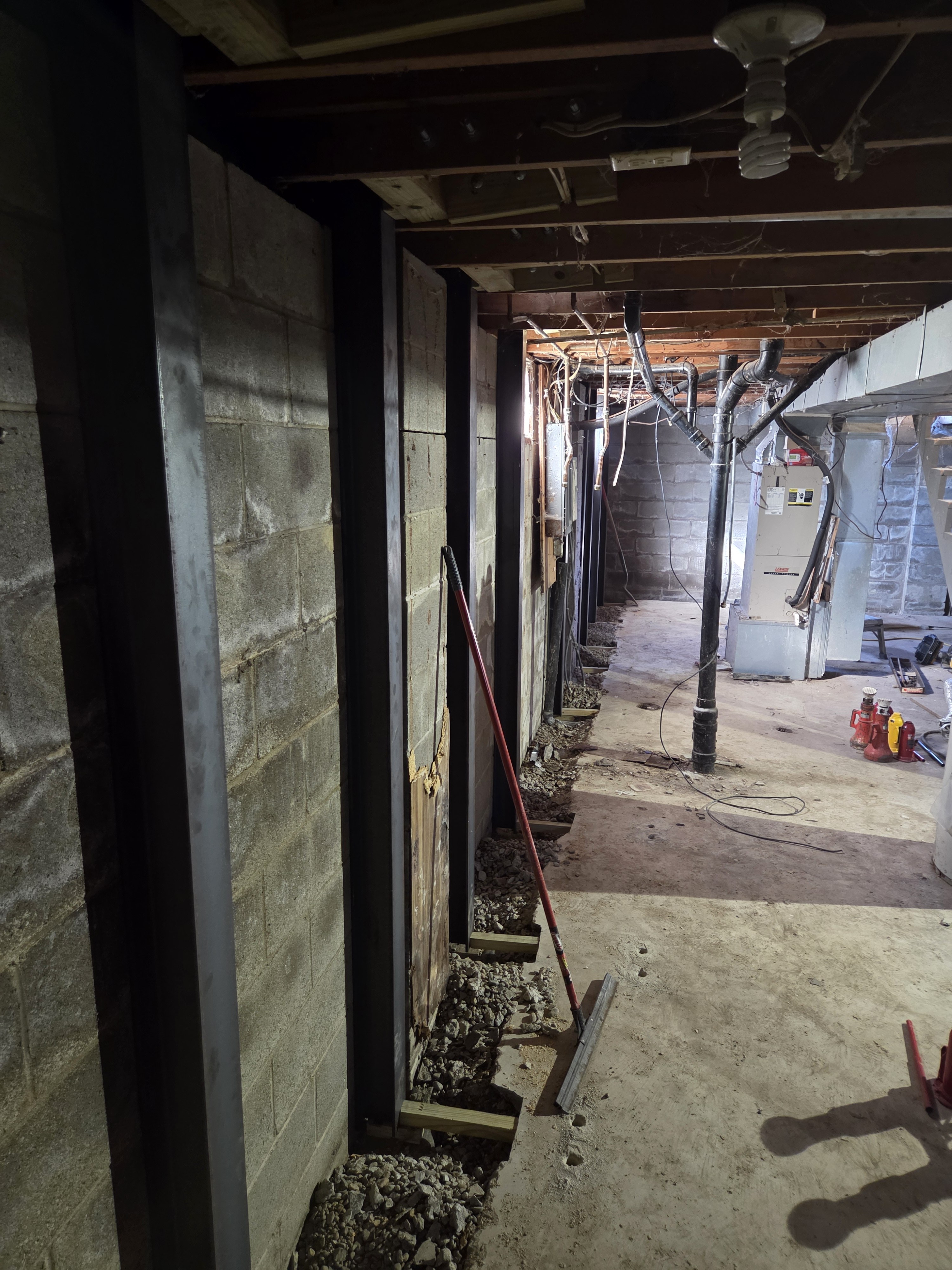
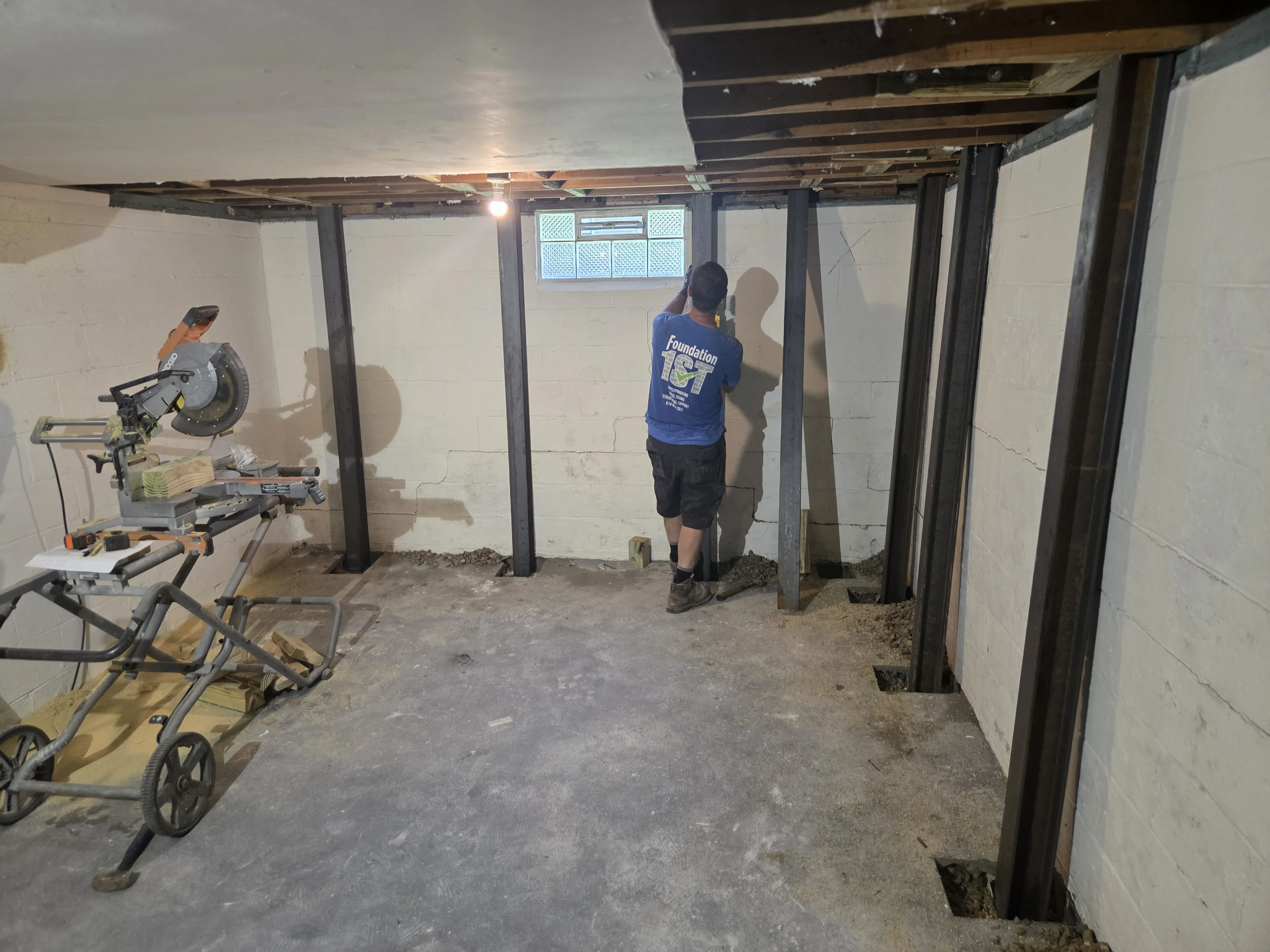
Steel I-beams are positioned floor-to-ceiling, spaced to distribute the load and counteract the lateral pressure your soil is creating.
Anchored & Secured
Each beam is anchored at the top plate and footing. The system transfers the load into the structure rather than letting the wall absorb it.
Warranted for Life
Every steel beam installation completed to our specifications comes with a lifetime warranty. If there's ever a problem with the work, we make it right no runaround.
The Right Beam for Ohio Basements
Not all steel beams are the same. The steel I-beam is the structural standard for residential foundation reinforcement it's what engineers spec, and it's what we use on every job.
Engineered for Lateral Load
Steel beams are specifically suited to resist the horizontal pressure from saturated Ohio clay soil pushing against basement walls.
Non-Invasive Installation
Beams are installed from inside the basement. No excavation, no landscaping damage, no weeks of disruption.
Lender & Inspector Accepted
Steel beam systems are recognized by lenders and home inspectors as a permanent structural repair important when it's time to sell.
Carbon Fiber Wall Reinforcement
For walls with mild to moderate bowing, carbon fiber straps are a lower profile option to stop the wall from moving further. Strips of high strength carbon fiber are bonded directly to the wall using an industrial epoxy, creating a rigid brace that resists inward pressure from soil and water.
Carbon fiber works best on walls with bowing under 2 inches. For more severe bowing or walls that have already shifted significantly, steel beams are the stronger option.
Low Profile
Sits almost flush against the wall, taking up far less space than a steel beam system.
Faster Install
Most carbon fiber jobs are completed in a single day.
Paintable Finish
Once installed, carbon fiber straps can be painted over to blend with your basement wall.
Carbon fiber vs steel beams: Steel beams are anchored into the floor and joists above, giving them the strength to handle more significant bowing. Carbon fiber works best as a stabilizer for early stage bowing rather than a corrective option for walls that have already shifted.
Lifetime Warranty No Fine Print
Every steel beam installation completed to our specifications is backed by a lifetime warranty on workmanship. If a beam ever shifts, fails, or causes a problem due to our work, we fix it. That's not a marketing line it's in writing on every job we complete our way.
Frequently Asked Questions
The easiest way is to hold a long level or straightedge against the wall. Any gap in the middle means it has moved inward. You can also look for horizontal cracks running across the wall, which are a sign of lateral soil pressure. If you are not sure, we will come out and check it for free.
It depends on the length of the wall, how far it has moved, and the soil conditions. Most residential jobs use beams every 4 feet along the affected wall. We assess each job individually and will tell you exactly what your wall needs.
Usually not. Most standard policies exclude foundation movement and settling. It is worth calling your insurer to confirm, but most of our customers pay out of pocket or finance the repair.
They do take up a few inches of space along the wall. If your basement is unfinished, it is a non-issue. If it is finished, we talk through the layout with you beforehand so there are no surprises.
Most jobs are one day. A full perimeter can run into a second day depending on access and beam count. We will give you a realistic timeline on the estimate.
Both address bowing walls but work differently and suit different situations. We have a full breakdown on that. See our Steel Beams vs Carbon Fiber article in the resource section.
Get Your Wall Looked At Free
We do free on-site inspections with no pressure and no sales games. Brandon comes out, looks at the wall, and tells you exactly what's going on.